For years, autumn seemed to arrive with a fairly strict dress code.
Camel coats. Chocolate knitwear. Rust. Olive. Warm beige. Every shop appeared to receive the same memo at roughly the same time.
Every year, I mostly ignored it.
Chocolate brown in particular has been absolutely everywhere for the last few autumns. Fashion seemed determined that we should all fall in love with it. I never did. I could see that it looked beautiful on other people, I could appreciate it styled perfectly online and I could still scroll straight past it without the slightest urge to add it to basket.
I did not really know why.
Now I do.
Since having my colours analysed and finding out that I am a True Summer, autumn dressing suddenly makes much more sense to me. Not because I now follow a rigid set of rules about what I am and am not allowed to wear, but because I finally have evidence for something I had apparently been arguing on instinct for years.
It has also made me realise that autumn does not, in fact, require me to dress like a cinnamon stick.
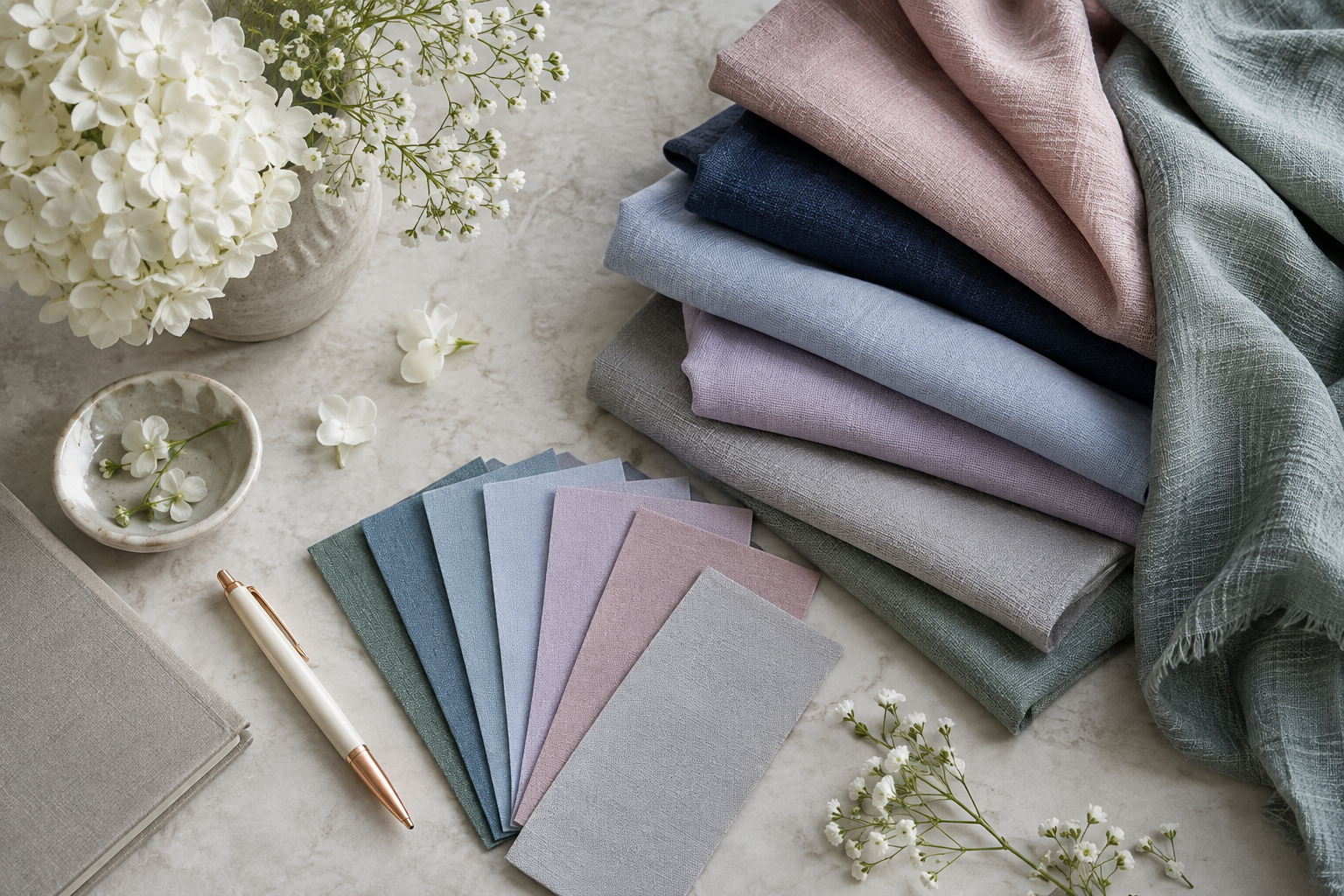
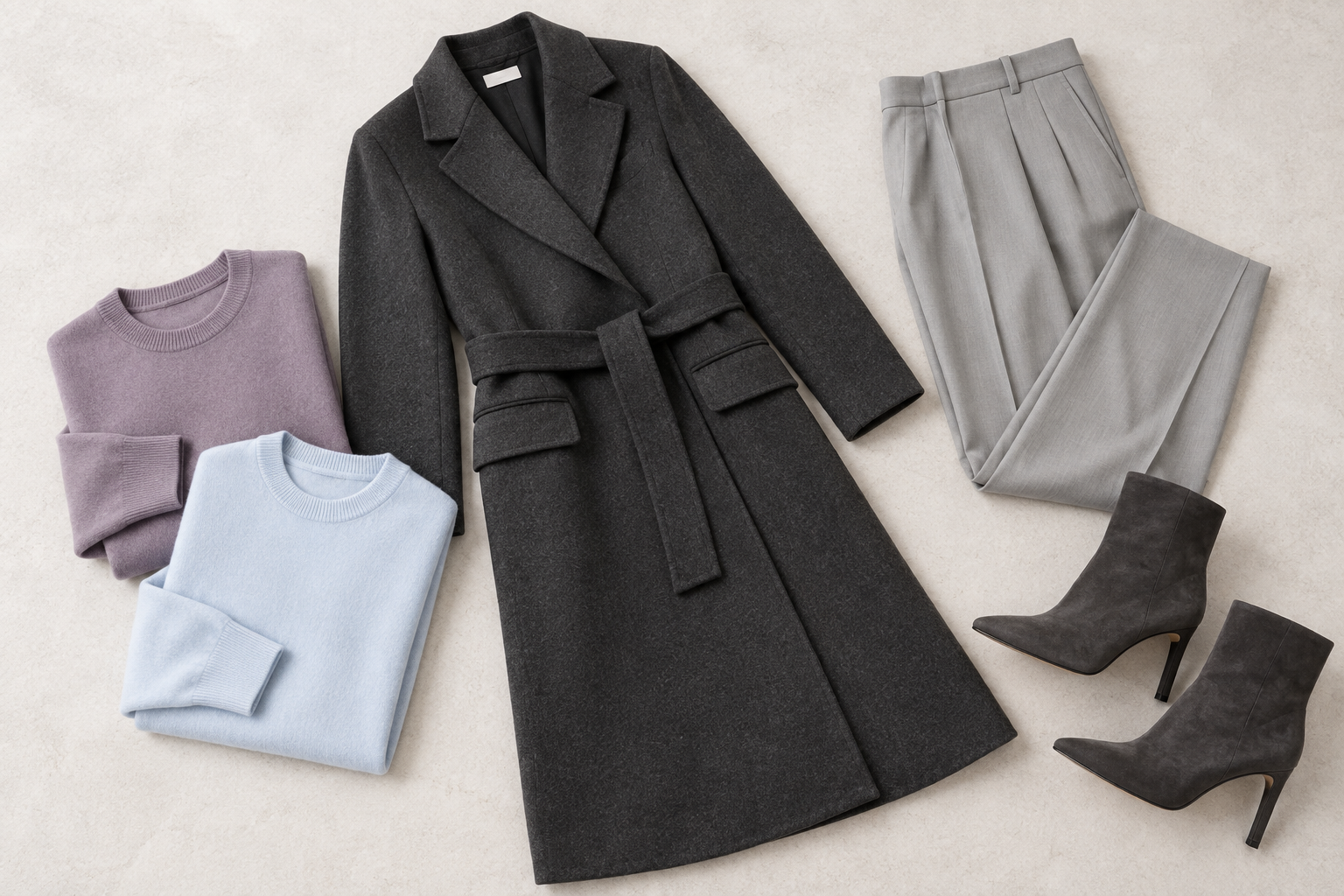
My version of autumn can still be grey, navy, dusty purple, soft blue and cool neutrals. I do not suddenly become warm-toned in September just because Zara would like me to. The proposition has been considered and rejected.
More importantly, colour analysis has changed the way I shop.
A lot of my wardrobe was already broadly within my palette. I have always gravitated towards navy, grey, blue and softer cool tones, so there was no dramatic wardrobe purge and no ceremonial bin bag of “wrong” colours leaving the house.
What changed was the level of refinement.
I became much more aware of shade. I started noticing the difference between a colour I thought I could not wear and a version of that colour that actually worked beautifully. That has probably been one of the nicest surprises because colour analysis has not made my wardrobe feel more restricted. It has made it feel more varied.
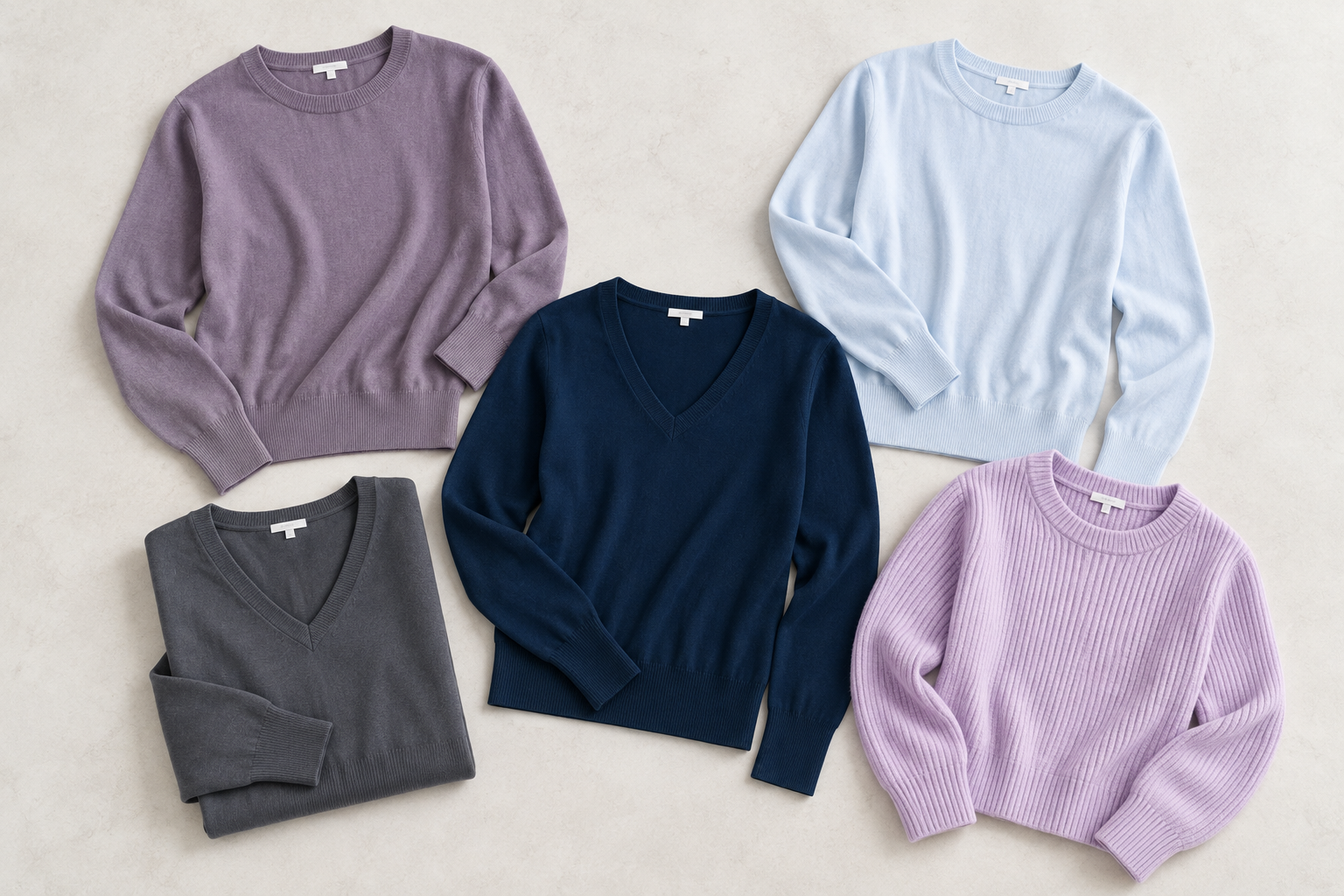
I have added colours I would previously have overlooked simply because I now know what to look for. A soft cool purple, the right pink, a muted blue or a good grey can all add something different without making the wardrobe harder to combine.
Once the wardrobe became more coherent, black stopped being quite as useful as it once was.
For years, my default full-length winter coat was a black Hobbs coat. I still own it and there is absolutely nothing wrong with it. I have not renounced black as though it has personally offended me. I just do not wear it very often anymore.
The rest of my wardrobe has moved on.
I already have a full-length navy Hobbs coat, which still works perfectly. I also have an ivory boucle coat and a blush-ivory coat that I wore for my wedding. What I did not have was another versatile everyday neutral that could play the role black used to play without looking slightly disconnected from everything else.
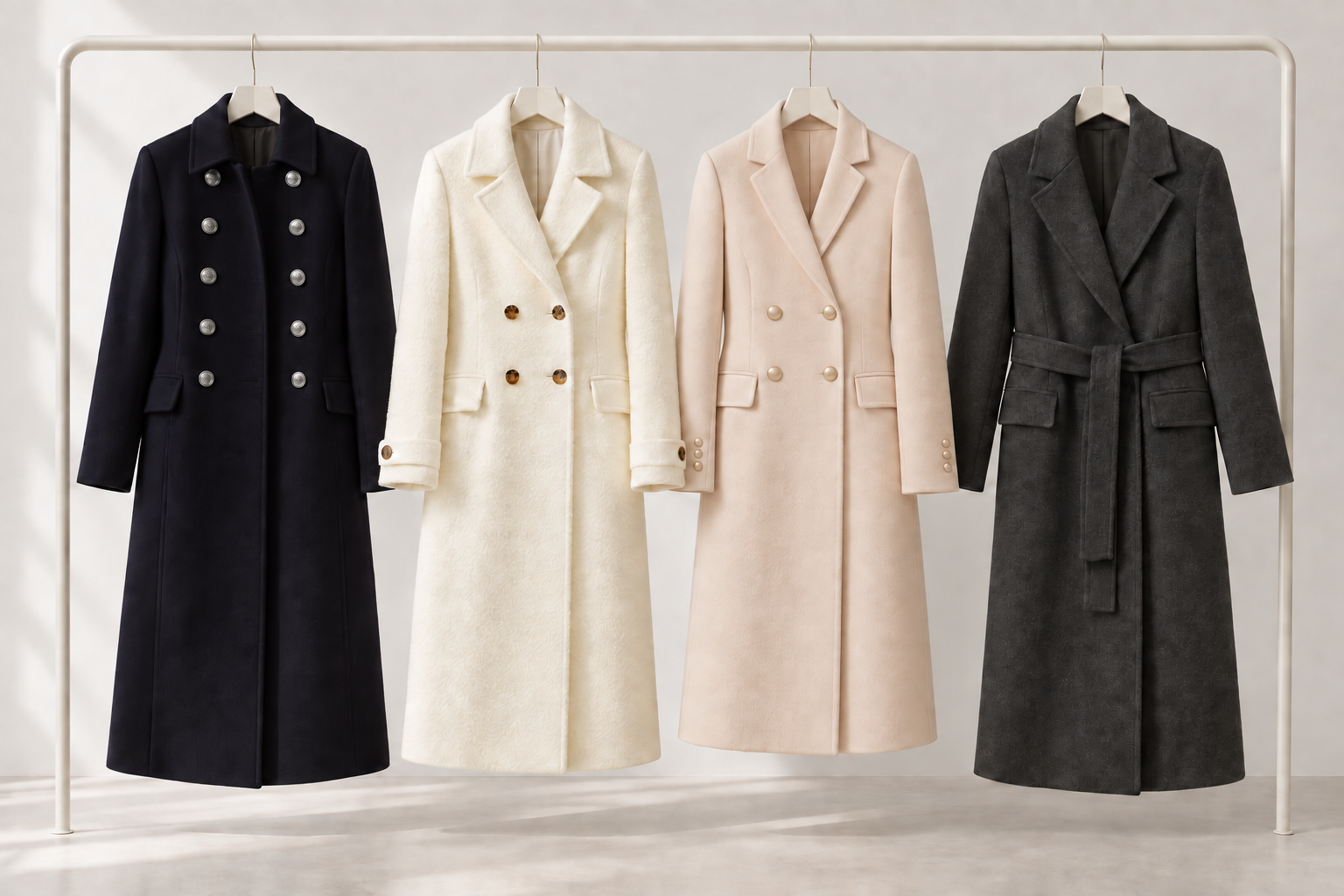
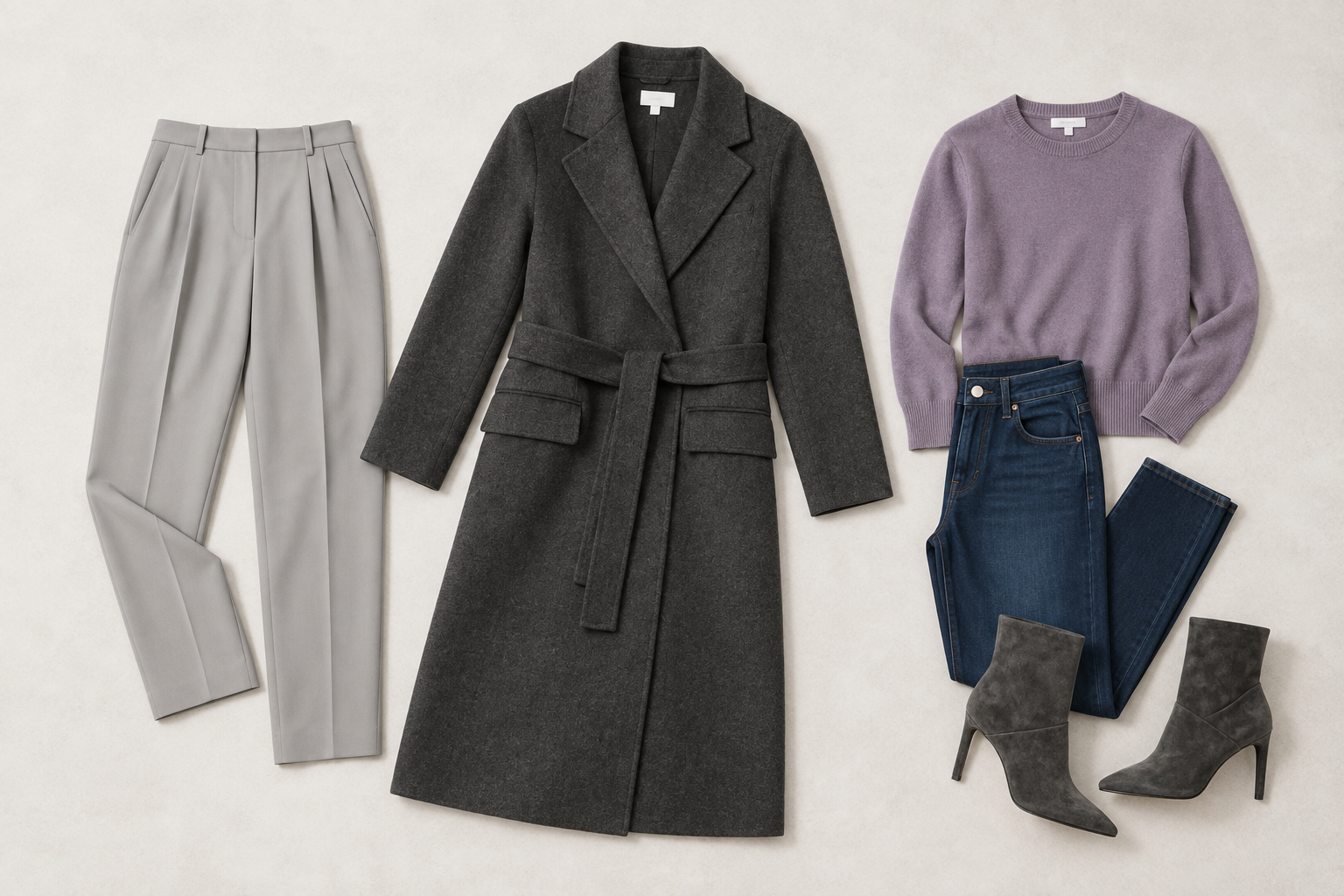
That is what prompted the grey Reiss coat.
It was not one of those purchases where I thought, “Grey coat. Groundbreaking.”
It was the combination of the shade, the cut, the length and the fact that I could immediately see it working across the wardrobe I already own. I like a long coat because I find it far more useful than a shorter jacket. This one will work over tailored trousers and knitwear for the office, but I can also wear it with jeans and boots for a smarter casual look.
It fills an actual gap.
Increasingly, I think that is where the burden of proof should sit.
I still like clothes. I still enjoy shopping and I am certainly not pretending I have achieved some saintly level of wardrobe minimalism. But I am far more discerning now about whether something genuinely adds anything new.
If I already own several knitwear pieces in almost the same shade, another one does not really give me more options. A different colour within my palette might.
If I already have a coat for a particular purpose, the next one needs to do something else.
If a prospective purchase cannot survive that fairly mild cross-examination, it probably does not need to come home with me.
That naturally makes the shopping list shorter.
It also means I am much more comfortable with not finding anything. There are particular shades I would happily add to my wardrobe, especially in knitwear, because they would create combinations I do not already have. But if retailers do not produce them, I am not going to buy something vaguely similar just because I have decided I ought to be shopping for autumn.
This is where the traditional autumn palette can still be slightly irritating.
Retailers remain absolutely devoted to camel and chocolate. Every September, they return with the confidence of people relying on very established precedent.
Unfortunately for them, I am no longer persuaded by the authorities.
Fortunately, there are more alternatives than I used to notice. Reiss has had some particularly lovely greys this year and both the coat and a recent pair of boots are good examples of things that feel seasonal without requiring me to suddenly reinvent myself as a woman who owns seventeen shades of brown.
That is really the biggest change colour analysis has made.
It has not just changed what colours I buy. It has changed the filter I use before I buy anything at all.
I am less interested in what I am apparently supposed to want for a new season and more interested in what genuinely improves the wardrobe I already have. Sometimes that means a new piece in a shade I did not own before. Sometimes it means finding a better neutral. Sometimes it means rediscovering clothes that were already there and simply styling them differently.
Sometimes the evidence is insufficient and the application to join the wardrobe is refused.
Which is probably the least glamorous autumn trend of all, but possibly the most useful.